Building with Hempcrete, not your average build
Hempcrete and Dovetail
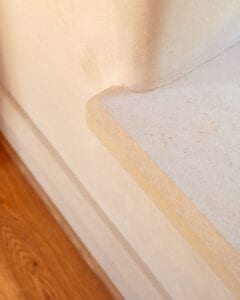
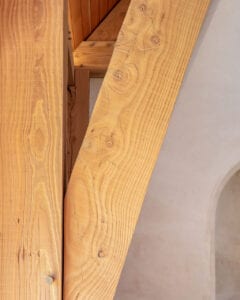
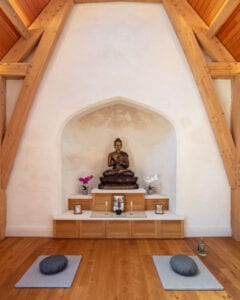
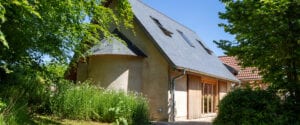
Hartridge buddhist monastery shrine room was a design and build project, originally conceived with a straw-bale wall construction. Throughout the design process, the wall construction underwent value engineering for improved performance, and it was decided that Hempcrete met our clients needs best. Along with lime render inside and out, it would create a healthy, breathable and lower-than-zero carbon space which was in line with the environmental credentials the Monastery asked us to achieve.

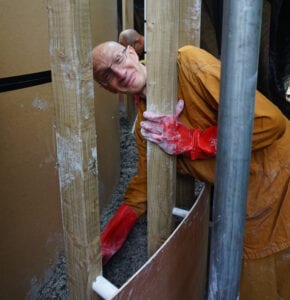
Caution, Monks at work!
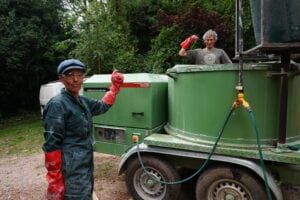
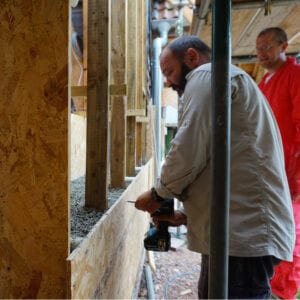
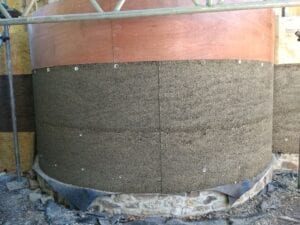
Our clients at Hartridge were keen to be involved with the build of the shrine room, and our crew welcomed several of the monastery’s volunteers including the Buddhist Monks, to get involved in the Hempcrete process. A few worked in their traditional robes, with added PPE, along side the Dovetail crew and over three days we insulated the entirety of the walls. Many thanks to our good friends at HempcreteUK who supplied the materials and expert insights on the day. We were able to form flowing shapes like the rotund bay, and the traditional shape of the curved buddah alcove. Much fun was had and with all hands on deck, progress was rapid.
Light as a feather yet self supporting
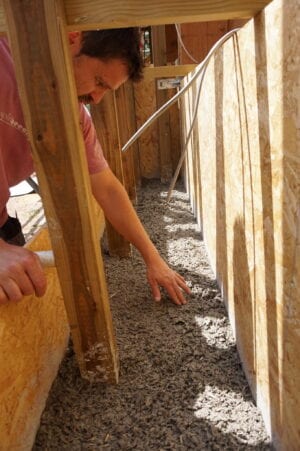
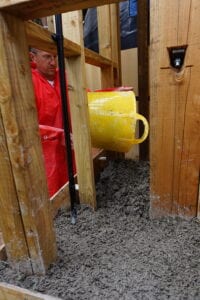
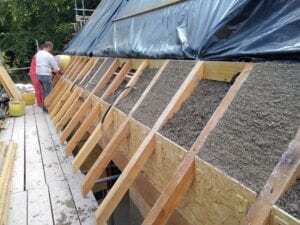
Hempcrete, is made on site by mixing hemp shiv (the woody stem of the plant) together with a binder. The binder is either a pure lime, or lime mixed with a small ratio of Portland cement. What comes out is buckets full of wet lightweight hempcrete that can be easily carried by hand and spread in layers to build up the walls around a structural stud frame enclosed with OSB shuttering. 12hrs later the shuttering is removed and moved up to the next level and the wall is built up in stages, right up to the top of the rafters. It dries to form a self supporting thermal mass, providing a breathable insulation and wall build up in one.
Better than Zero carbon. No damp, no nasties, no extremes
As a plant, hemp absorbs a very high level of CO2 as it grows, and because the production and application of hempcrete is quite a low-tech process, the end result is a material which, despite the production of the lime (a relatively high carbon material), transport, and energy use during manufacturing, still locks away a net 110 – 160 kg of CO2 per m3 of hempcrete for the lifetime of the building. In addition, hempcrete walls have a much better thermal performance than conventionally insulated buildings, meaning that the energy used by the occupants of the building is dramatically reduced compared to conventional construction.
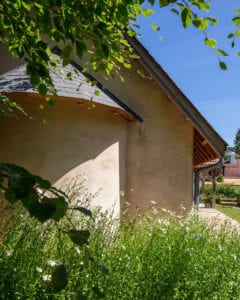
It is breathable, and naturally allows humidity and condensation to regulate between indoor and outside temperatures. It prevents damp and inhibits bacteria growth. The lime coating around each fibre of hemp gives great ratings fire, rot and pests, so no chemical treatments are required. It even protects the timber frame structure within so internal studwork does not need to be treated.
Healthy buildings that perform well
The thermal performance of hempcrete is so high, due to its thermal mass and insulative value. Hempcrete walls and roof will give a building that is warm in winter and cool in summer, without the need for mechanical ventilation. All this helps to create comfortable and healthy living conditions without costing the earth in fuel.
Check out the completed Buddhist Monastery Shrine room build HERE